
Salt Lake City, UT SQL Server Development and Consulting
SQL Server development and consulting for Salt Lake City and the Wasatch Front: Salt Lake City, Sandy, West Valley City, Draper, Lehi and Ogden.
Fast growth, slow database
A database designed for a smaller Salt Lake City company can struggle when the business triples. Queries slow down, overnight jobs run into the workday, and the SQL Server version underneath may already be out of support.
Keene Systems modernizes and tunes those databases, upgrading to supported versions, improving structure and queries, and preparing the platform for the next stage of growth.
The cost of a slow database in a growing company
Slow performance frustrates customers and can cost renewals. Firefighting consumes engineering time that should go to product. Tuning and modernization pay back in retention and productivity.
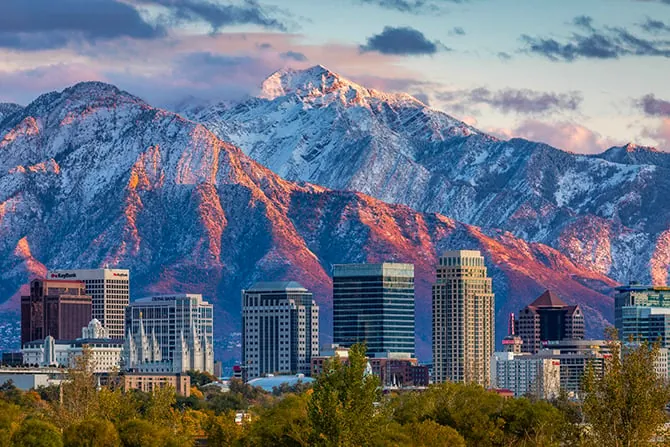
SQL Server modernization and performance in Salt Lake City
We have worked with SQL Server since the late 1990s. We benchmark current performance, tune queries and indexes, plan upgrades or Azure migrations, and set up monitoring. Explore how we work with SQL Server.
What we deliver for Salt Lake City database performance
- Performance analysis: the real causes of slowdowns identified.
- Query and index tuning: targeted improvements.
- Design changes: key tables restructured where needed.
- Version upgrade: a supported platform.
- Capacity planning: room for future growth.
What changes after tuning and modernization
Performance returns, overnight work finishes on time, and the database is ready for the next stage of growth. Engineers focus on features instead of fires.
How we support Salt Lake City from New Hampshire
We work with companies in Salt Lake City and the Wasatch Front by secure remote access and video call. The same analysts and SQL Server developers stay with you from the first review through ongoing development, and what we build belongs to you.
Utah’s fast-growing companies often discover their database limits at the worst possible time: during a promotion, a quarter-end, or a surge in new customers. By then, the problem affects revenue as well as IT.
Planned modernization prevents that. The database moves to a current version, performance is tuned for real workloads, and capacity is planned ahead of growth rather than after a crisis.
Restoring performance as customers grow
Software companies often discover database limits when growth is going well. We start by measuring which queries and jobs consume the most time, then apply targeted fixes: better indexes, rewritten queries, and a few structural changes to the heaviest tables. Many improvements can be made without downtime.
The upgrade to a current SQL Server version follows, tested against the application’s full workload on a copy before production changes. Capacity planning uses real usage trends, so the database is sized for the next stage of growth, not just today’s load.
Engineers receive documentation of what was changed and why, so they can keep performance healthy as they build new features. Customers notice faster screens and reports, and support tickets about slowness decline.
Ongoing monitoring tracks query performance over time, so emerging problems are caught long before customers feel them.
The work is done in close collaboration with your engineers. We share our analysis, review proposed changes together, and explain the reasons behind each fix, so the team understands how to keep the database fast as the product evolves. Many clients ask us to review new features’ database changes before release, which prevents performance problems from reaching customers at all.
A Salt Lake City example
An illustrative scenario, drawn from the kinds of projects we handle. It is a composite, not a specific client.
Picture a fast-growing Salt Lake City software company whose application database ran fine at a thousand customers. At ten thousand, reports time out, overnight jobs run into the morning, and the SQL Server version is nearing the end of support.
Tuning the heaviest queries, redesigning a few key tables, and upgrading to a current version can restore performance and give the company room for the next round of growth.
Customers stop seeing slow screens, and the engineering team stops firefighting.
Signs your Salt Lake City database is struggling with growth
- Reports and screens are slowing down.
- Overnight jobs overrun.
- Customers notice delays.
- Your SQL Server version is nearing end of support.
- Engineers spend time firefighting.
How we tune a Salt Lake City database
We measure current performance and identify bottlenecks.
We apply improvements in priority order, upgrade safely, and benchmark the results.
We have helped many organizations move off aging platforms, from re-engineering NStar Electric and Gas’s application for secure online access to converting Centris Consulting’s Access product into a scalable web system.
SQL Server questions from Salt Lake City companies
Can tuning help without an upgrade?
Often, yes. We measure first and recommend the most effective steps.
Should we move to Azure?
Maybe. We compare options based on your workload and budget.
How do we plan for growth?
With capacity planning based on your actual usage trends.
Can tuning be done without downtime?
Most of it, yes.
Can you help our engineers learn the changes?
Yes, through documentation and walkthroughs.
How much faster can it get?
Often dramatically, depending on the cause.
Can you work with our engineering team?
Yes, closely, including code reviews for database changes.
Can tuning happen during business hours?
Most changes, yes; larger ones are scheduled.
Can we move to Azure SQL later?
You can. The tuning work we do now carries over, and a well-organized database is easier to move.
Will you benchmark the results?
Yes, before and after each change.
Can you help design new tables for upcoming features?
Yes, as part of ongoing support.
Can we set alerts for slow queries?
Yes. Monitoring watches for queries that run past a threshold and notifies us and your team.
What we love about Salt Lake City
Ask anyone in Salt Lake City what they like about living there and you will hear a list like this one:
- Fry sauce: the local condiment that goes on everything.
- Silicon Slopes: a fast-growing technology community along the valley.
- The Wasatch Mountains: a wall of peaks rising straight from the edge of the city.
- The skiing: world-class resorts less than an hour from downtown.
- Temple Square: gardens and landmark buildings at the center of the city.
- The Great Salt Lake: sunsets and Antelope Island a short drive away.
- The national parks: five of them within a day’s drive.
Salt Lake City databases we modernize
Growth-strained SQL Server environments we commonly improve:
- E-commerce & direct sales: order and customer databases.
- Financial services: transaction and reporting data.
- Healthcare: operational databases.
- Software companies: application back ends.
Why Keene Systems
Keene Systems is veteran-owned and has supported business databases since 1987. Our 50+ professionals include architects who design for growth.
Is your database keeping up with your growth? Schedule a 20-minute project exploration call.
Schedule Your Salt Lake City, UT SQL Server Discovery Call