


SQL Server database design can transform business operations by giving the applications people rely on a consistent, structured foundation for storing and using business data. For manufacturers managing parts, orders, and production information, or growing companies replacing spreadsheets, the database affects how reliably teams can do their work. Keene Systems designs custom software and databases around how a business actually operates, rather than forcing its workflows into a generic model.
Key points:
- Start with the work: Document the records, rules, and handoffs your application must support before choosing tables or indexes.
- Treat the database as part of the application: Data design, application architecture, and user workflows need to be considered together.
- Plan for change: A database should support current requirements while leaving room for new locations, users, integrations, and reporting needs.
Key takeaways
Good SQL Server database design connects business rules to reliable data structures, application behavior, and practical maintenance.
A database is an operational foundation
A well-designed database is not just a place to save records. It defines how an application represents business facts, keeps related information consistent, and makes that information available to staff and connected systems. Those decisions influence daily work long after the first release.
How SQL Server design options fit business operations

There is no single database project that fits every company. The right scope depends on whether the current system is fundamentally sound, whether its data model still reflects the business, and whether the application needs to change along with the database.
Improve an existing SQL Server database
A targeted improvement project can make sense when an application works but particular screens, reports, or data operations have become slow or unreliable. The work may include examining query behavior, checking how tables and relationships are structured, and reviewing indexes against actual read and write patterns.
That review should start with a reproducible problem. For example, a manufacturer may find that searching historical work orders takes too long, while entering current production data remains responsive. Tuning only the relevant query and data access path may be more appropriate than replacing the entire database.
According to Keene Systems’ SQL Server Database Development page, Microsoft SQL Server processes transactions and queries up to 30 times faster than its earlier versions. That fact describes a comparison with earlier versions, not a guarantee that upgrading alone will fix a poorly modeled database or inefficient application.
Redesign the data model for a custom application
A broader database redesign is worth considering when teams keep duplicate records, depend on manual reconciliation, or cannot represent essential business rules in the existing structure. A spreadsheet-based process, for instance, may store customer, order, and shipment details in several files. A purpose-built application can model those as related entities, making the relationships explicit and reducing conflicting copies.
SQL Server can support a custom web application with relational tables, constraints, and queries designed for the information the application needs. The database structure should still follow the business domain. A table should represent a meaningful entity or event, not simply mirror every column from a legacy spreadsheet.
Keene Systems explains that a well-architected SQL Server database can improve business efficiency through better data management, fewer manual errors, and faster decision-making. Which of those outcomes is realistic depends on the source data, application design, and the way staff use the system.
Modernize the application as well as its database
Sometimes the main constraint is not the database alone. A company may have an aging desktop application that only one former programmer understood, or a FileMaker or PHP application that no longer fits current access and integration needs. In these situations, preserving the old data model unchanged can carry the old limitations into a new interface.
Modernization can involve mapping the current data, defining a revised model, and building a web application that provides controlled access to shared information. The database and application are planned together, with attention to migration, permissions, reporting, and connections to other systems. Keene Systems’ overview of software architecture and business efficiency offers related context on aligning application structure with operational needs.
The SQL Server transformation market report says Business Operations dominates with 56.5% due to billing, orders, and payroll running nonstop. This underlines why operational systems often need close attention, but it does not mean every business should undertake a database transformation. The appropriate option depends on the actual system and business case.
How to choose the right database approach
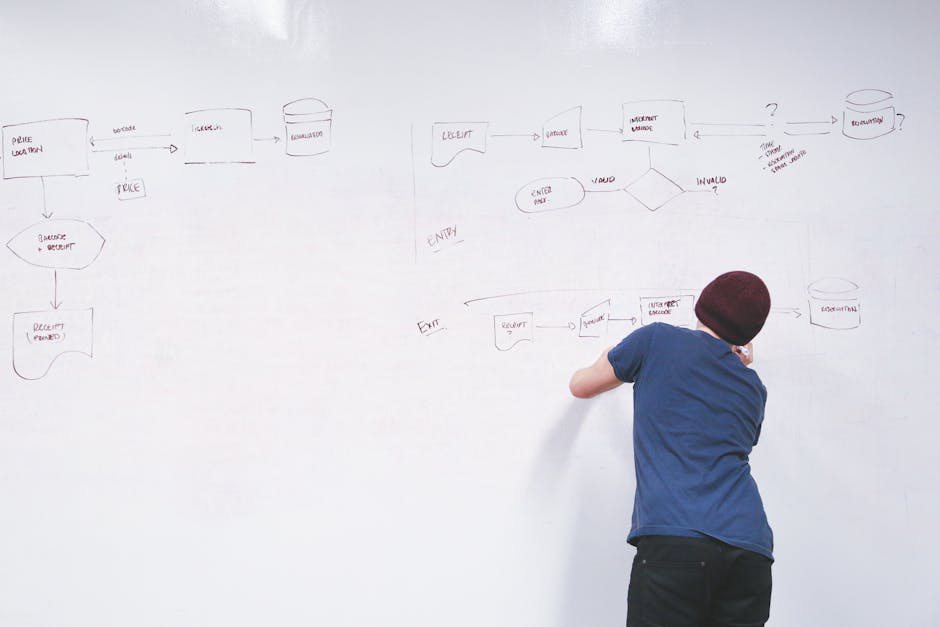
Choose a project scope by tracing the operational problem to its cause. Slow work, errors, and reporting delays can come from different sources: a query pattern, a missing relationship, duplicated data, a complicated workflow, or an application that has reached its limits. Starting with the symptom alone can lead to tuning the wrong part of the system.
Use evidence from the current application
Gather examples from the people who use the system and from the software itself. Identify the slow screens, reports that require manual cleanup, records that are often inconsistent, and tasks that depend on copying data between spreadsheets or applications. A useful assessment connects each complaint to a concrete business process and a data operation.
For a manufacturer, that might mean following a work order from entry through production and shipment. Check which records are created at each step, which users update them, and where the same item or status is entered more than once. For a small business replacing spreadsheets, map how customer, job, and invoice details are reused before deciding what the new application should store.
Compare the cost of changing versus carrying forward
A contained database improvement may be sensible if the current model is understandable, the data is trustworthy, and the application can be maintained. Redesign or modernization becomes more relevant when critical rules are buried in application code, key data is duplicated, integrations are brittle, or changes routinely break unrelated features.
Legacy software is common, but that is not a reason to migrate without a plan. According to TechRadar’s report on obsolete database software, 97% of U.S. database administrators are operating obsolete software. For an individual business, the practical question is whether its version and surrounding application can still be maintained safely, and what a move would require.
Check fit, ownership, and future workload
Before choosing a provider, ask how it will understand the existing schema, profile data quality, document business rules, and test migration results. Clarify who will own database scripts, how changes will be reviewed, what environments will be used for testing, and how the team will handle support after launch. If the original developer has left, make sure the new team plans to recover both technical knowledge and operational context.
Also discuss expected access patterns, reporting, concurrency, data retention, and integrations. A growing startup may need a structure that can accommodate new workflows, while a manufacturer may prioritize dependable transaction handling and traceable records. The right design is the one that supports the actual workload without making future maintenance unnecessarily difficult.
Pro Tip: Bring a real example of a troublesome record or report to the design discussion, with sensitive data removed. A concrete case helps a development team trace the workflow, data relationships, and query needs instead of guessing from a feature list.
SQL code quality deserves attention during that assessment. The study On the Prevalence, Impact, and Evolution of SQL Code Smells in Data-Intensive Systems reports that SQL code smells are prevalent and persistent in data-intensive software systems. That is a reason to review query and schema decisions as part of ongoing development, not proof that any particular database is defective.
What the database design process looks like

A disciplined custom software project turns operational requirements into a model, then tests that model against real application behavior and data. The exact sequence varies with the condition of the current system, but these steps help prevent a database project from becoming a technical exercise detached from the people who will use it.
From discovery to deployment
- Map workflows and business rules: Identify who creates, updates, approves, and uses each important record. Capture exceptions, such as order changes or partial shipments, that the application must represent.
- Inspect the current data: Review schemas, spreadsheets, exports, integrations, and known quality issues. Determine which data is authoritative, what needs cleaning, and which records must be retained.
- Define the model and boundaries: Design entities, relationships, keys, constraints, and application responsibilities around the agreed requirements. Decide which rules belong in the database and which belong in the application layer.
- Plan queries and access patterns: Identify the screens, reports, and integration calls that will use the data. Consider how users read and update records so indexes and query design support actual workloads.
- Build and validate incrementally: Implement the database with the custom application, then test representative workflows, permissions, errors, and concurrent use. Review whether the results match the business rules, not just whether the code runs.
- Migrate and verify: Map old fields to the new model, define transformations, and compare sample and full migration results. Keep a documented approach for reconciliation and cutover appropriate to the system’s operational risk.
- Prepare for ongoing maintenance: Document schema decisions, deployment scripts, backups, monitoring responsibilities, and how future changes will be tested. Agree on ownership and support before the application is handed over.
Pro Tip: Test migration with representative edge cases, not only clean, recent records. Duplicate customer entries, retired product codes, missing dates, and unusual status values often reveal mapping assumptions before they affect live operations.
A well-designed application also needs a clear architecture around its database. The database should not become an undocumented dumping ground for every business rule, nor should the application duplicate logic in multiple places without a deliberate reason. Keene Systems’ article on SQL Server database design in custom software development describes database design as groundwork for reliable, scalable applications tailored to business needs.
A sound process cannot guarantee that every legacy record is clean or every change can happen without operational impact. Data quality, system access, vendor dependencies, and the complexity of current integrations all affect the timeline and migration strategy. The work should make those constraints visible early.
Ready to discuss a database or custom application challenge? Talk with our team about your SQL Server project.
FAQ about SQL Server database design
What does SQL Server database design include?
SQL Server database design includes deciding how business information is represented, related, validated, accessed, and maintained. For a custom application, that can mean defining tables and relationships, choosing keys and constraints, planning queries and indexes, and deciding how the application interacts with the data. The scope may also include reviewing an existing schema, planning data migration, and documenting how database changes will be managed.
It should be tied to business workflows, not treated as table creation in isolation.
How can database design improve daily business operations?
A database designed around real workflows can give the application a consistent way to store and retrieve important business records. For example, a work management application can connect a job to its customer, assigned staff, status changes, and related documents rather than depending on disconnected spreadsheet copies. Constraints and validation can help prevent some inconsistent entries, while well-planned queries can support the screens and reports staff need.
The degree of improvement depends on the current process, the quality of the data, and how well the application is implemented and adopted.
Should a small business replace its spreadsheets with SQL Server?
Not necessarily. A spreadsheet can be adequate for a limited task with few users and little need for shared, structured records. A custom SQL Server application may be worth assessing when teams repeatedly reconcile versions, rely on manual copying, need role-based workflows, or must connect records across departments.
Start by mapping the process and identifying the errors or bottlenecks the application should address. The goal is not to move every spreadsheet into a database, but to build software when the process calls for it.
Is SQL Server database design useful for manufacturers?
It can be useful when manufacturing operations need related information about items, orders, work in progress, inventory movements, or shipments represented consistently in a business application. The data model should reflect how the company actually defines and tracks those records, including relevant exceptions. Design also needs to account for which users or systems create updates and what operational reports depend on them.
SQL Server alone does not determine the right manufacturing workflow; discovery with business users is needed to define requirements.
Can a SQL Server database be modernized without replacing the whole application?
Sometimes. If the application can still be maintained and its boundaries are clear, a team may be able to improve the schema, queries, or integration points in a focused project. In other cases, the interface and data model are so closely tied to an obsolete desktop program that application modernization is part of the solution.
The team should inspect dependencies, code access, data quality, and business rules before recommending either path. Migration may be staged, but the approach depends on operational risk and system constraints.
What should we ask a custom software provider before starting?
Ask how the provider will learn the business workflows, inspect the existing database, and establish which records are authoritative. Discuss how it will test data migration, validate application behavior, document database changes, and handle deployments and ongoing maintenance. You should also clarify access to source code and database scripts, who makes design decisions, and how integration requirements are assessed.
A useful proposal explains assumptions and risks, rather than promising a fixed result before the system and data have been examined.
How Keene Systems helps with SQL Server database design
Keene Systems has provided custom software development since 1987 and has a team of 50+ skilled web and mobile developers. Our work includes SQL Server Database Design, ASP.NET and web application development, software architecture, and application integration. We approach database work as part of the broader application, from exploring the operational problem through development and ongoing maintenance.
That is useful for companies building a new system, replacing a legacy desktop application, or making a spreadsheet-driven workflow into a structured web application.
Relevant services include:
- SQL Server Database Design: Structure business data around application requirements and operational relationships.
- Custom Software Development: Build tailored applications for workflows that off-the-shelf tools do not fit.
- ASP.NET Development: Develop web applications that use SQL Server as part of a custom solution.
- Application Integration: Connect application data and processes where the technical requirements support it.
We also explain how digital transformation supports modern businesses, including the importance of matching technology changes to business needs. If your current data model or application is limiting the work your team can do, contact Keene Systems to discuss a custom software solution.
Conclusion: start with the operational problem
SQL Server database design can support better business operations when it reflects how people create, update, and use information, and when the application is designed around that model. It is not a shortcut around unclear processes, poor source data, or an application that lacks a maintenance plan. The strongest starting point is a specific operational problem, such as conflicting spreadsheet records, an unmanageable legacy program, or a report that requires repeated manual repair.
For a practical first step, document one workflow from the moment information enters the business to the point where it is used for a decision or handoff. Note the records involved, who updates them, where duplicate entry occurs, and which application functions are essential. That evidence gives a software team a grounded basis for assessing whether targeted SQL Server improvements, a redesigned database, or a broader custom application project is the right fit for your SQL Server database design business operations needs.